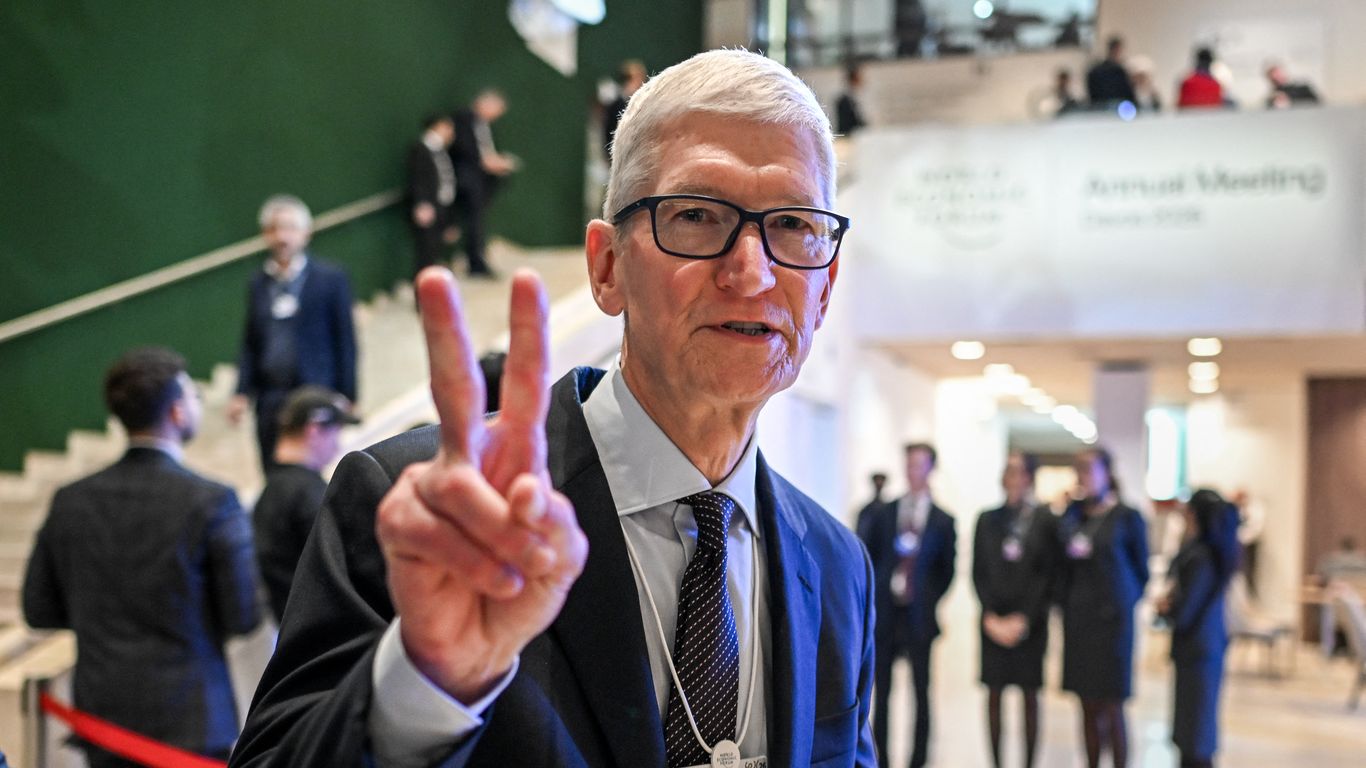
The Tim Cook era is coming to a close with an existential challenge for Apple: figuring out what comes after the iPhone.Why it matters: Cook extended the iPhone’s success into products like the Apple Watch and AirPods and built a powerful services business. But the company hasn’t broken into a major new category — and has stumbled into the AI era.Driving the news: Apple announced Monday that Cook will cede the CEO reins to hardware chief John Ternus, while remaining with the company as executive chairman.The company also promoted Johny Srouji, the driving force behind Apple’s chip success, to the new role of chief hardware officer. That could entice Srouji, whose name is often mentioned in tech CEO searches, to stay in Cupertino.The big picture: Cook has executed masterfully to maximize the company’s iPhone success and transform Apple into one of the world’s most valuable companies.Yes, but: His efforts to expand far beyond that device have largely sputtered. The company assembled a significant team to try to enter the autonomous car market, but gave up before bringing anything to market.The company’s initial foray into the mixed reality market, Vision Pro, remains for sale but at a price that has attracted relatively few buyers.Zoom in: Apple’s position in AI remains uncertain. In 2024, Cook painted a compelling vision for Apple Intelligence, personalized AI that would be able to answer questions from data stored in a variety of places, but do so in a way that would not be accessible to Apple or anyone else.But it has struggled to turn the vision into reality, repeatedly delaying the most ambitious features outlined in that keynote. A revamped Siri with some of those capabilities is expected later this year.Apple also decided to strike a deal with Google to have access to its Gemini family of models to power future Apple Intelligence features.The other side: Apple’s restraint could pay off if it can maintain its hardware advantage while others spend heavily on AI models, as Dan Primack outlined in an article last week.While most of its tech giant peers have spent billions on data centers and compute capacity, Apple has avoided such large outlays.If the AI models turn out to be a commodity, Apple may look wise to have avoided the compute capacity craze entirely.Zoom out: That still leaves unsettled what the next big hardware breakthrough will look like. OpenAI paid $6.5 billion to acquire legendary designer Jony Ive and his hardware team, with an initial device expected to be unveiled later this year.Meta continues to advance both its Quest virtual reality headsets and its Ray-Ban smart glasses.Google is also making a renewed push into smart glasses and VR headsets, in a joint effort with Samsung.The bottom line: Cook proved Apple could continue to grow without Steve Jobs. Ternus must prove that it can still innovate.